Digital future-readiness is the job of owners and CEOs.
It is decided not in the IT department but by management, board and shareholders. Delegating it means delegating the future of the company.

Engineer, HR leader, Group CIO, entrepreneur, investor. Having led transformation from all these perspectives, he quickly sees what really matters – and what only looks like progress.
Define the company's future mode of operation.
Steer and maximise effects on revenue and earnings.
Reduce complexity and ways of working that have no future.
Establish a results-oriented change architecture for AI.
A leadership culture that can handle the dynamics of AI.
We have clearly defined how our business model should work in five years – including the role of digitalisation and AI.
In successions or handovers we explicitly assess the digital maturity of the business model.
We measure digitalisation and AI by their impact on revenue, earnings and customer value.
Good AI solutions are used across the company – not as isolated islands.
We consistently switch off legacy solutions and reduce complexity.
For every key process and application it is clear who is responsible.
Good in-house solutions are made visible and reused.
We have decided which future capabilities we build ourselves and which we source externally.
Our leaders actively drive digital change rather than delegating it.
Digital competence is firmly represented on our advisory or supervisory board.
The foundations for digital future-readiness are not yet in place. That is not a failing – but a clear mandate for leadership.
Important building blocks exist but do not yet work as a whole. Now is the moment to turn initiatives into a clear direction.
Your company has a solid digital foundation. The next step is to deliberately extend and secure the lead.
Digital future-readiness is the job of owners and CEOs.
It is decided not in the IT department but by management, board and shareholders. Delegating it means delegating the future of the company.
Success shows in impact, not in impressive-sounding activities.
Digitalisation and AI must be measured by tangible results – in the top line, the bottom line and for the customer.
AI does not change the goals, but the ways to reach them.
Profitability, market position and growth remain valid. What changes is how they are achieved – and how long today’s strategies still hold.
Embracing the new includes unlearning.
Building the future also means clearing up: switching off legacy solutions, reducing complexity and honouring outdated ways of working – then letting go.
In successions and M&A, new value drivers count.
Digital maturity of the business model, recurring revenue, automation and tomorrow’s capabilities determine a company’s value – not the lowest IT cost ratio.
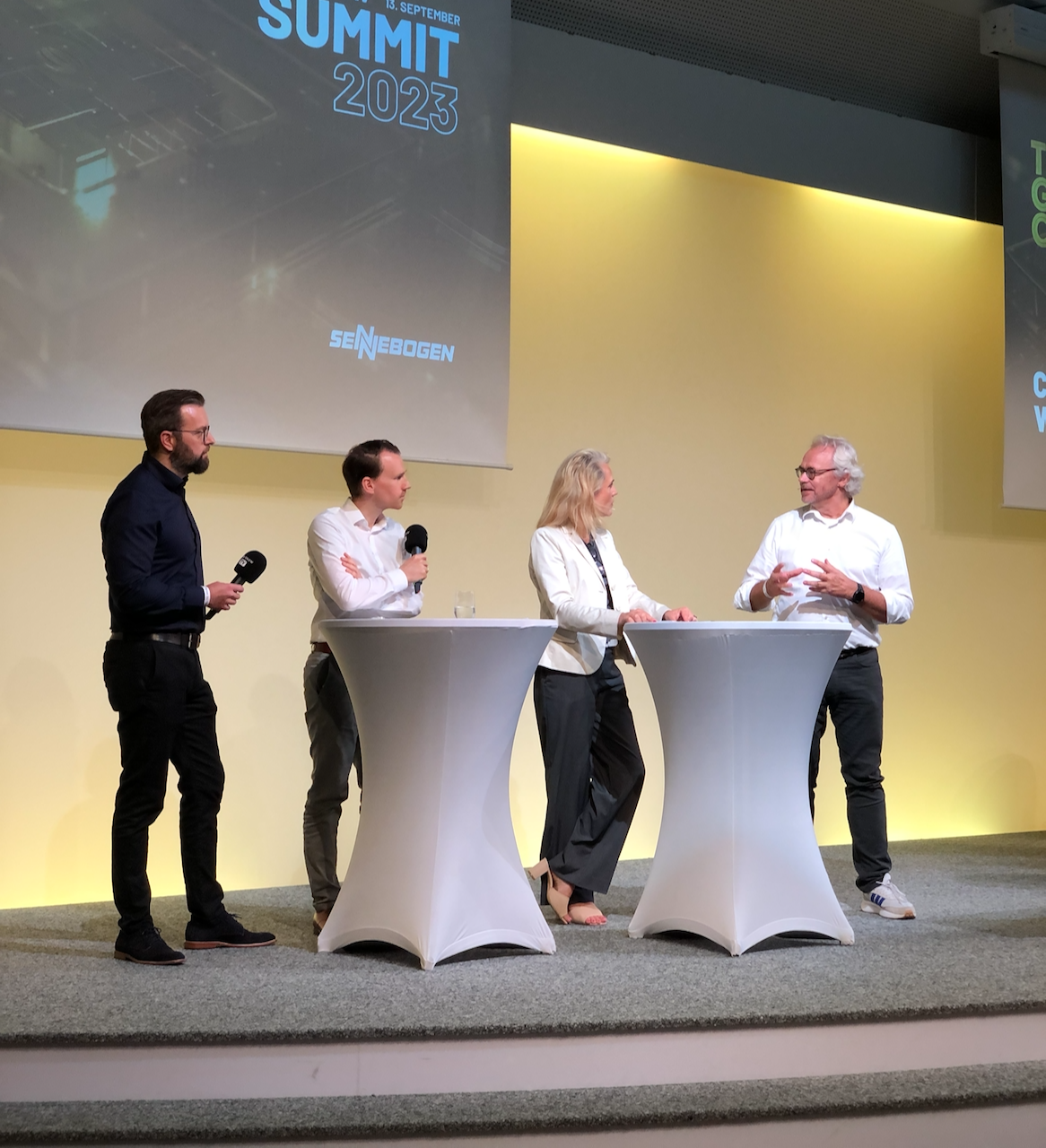
Digital competence on the board: the right questions on strategy, transformation, IT risks and succession.
Confidential, peer-level assessment – on strategy, organisation, technology and the right next step.
Clear positions on digital future-readiness, leadership in change and AI – for associations, conferences and companies.
Capital, mentoring and network for digital business models – and through Corporate Momentum Group, support through to implementation.